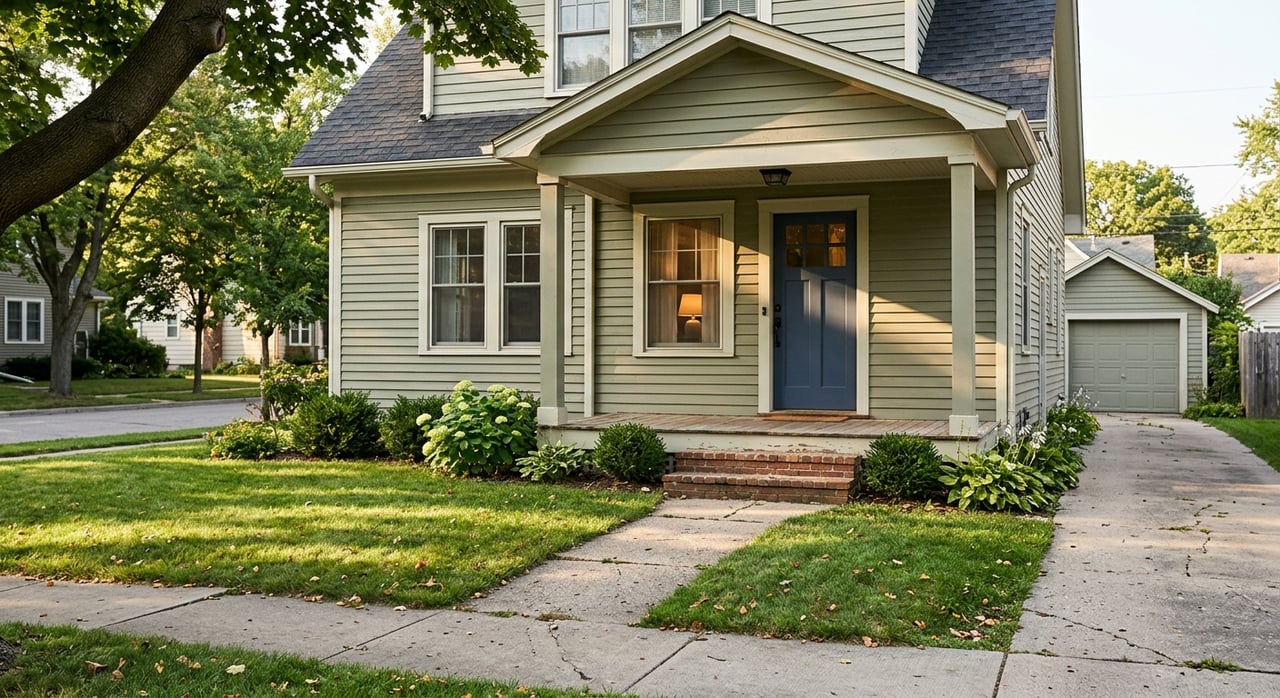
If you like the idea of being able to grab coffee, head to a park, or catch a downtown event without planning your whole day around a drive, living near downtown Plymouth may feel like a natural fit. It can be a smart option if you want a home with character, a more connected routine, and easier access to some of the city’s everyday amenities. This guide will help you understand what housing near downtown Plymouth looks like, how daily life tends to feel, and what tradeoffs to weigh before you buy. Let’s dive in.
Downtown Plymouth at a glance
Downtown Plymouth serves as a central part of the community, and the city’s 2040 planning material describes it as a compact mixed-use area centered on Michigan Street. That planning vision includes retail, offices, services, live-work space, and dedicated pathways for pedestrians and cyclists.
In practical terms, that means the downtown area is not built like a spread-out suburban shopping corridor. It functions more like a traditional town center, with a concentrated main-street feel and a mix of uses close together.
Historic downtown is generally identified around Center, Washington, and Water Streets and the Yellow River. That setting helps shape the experience of living nearby, where day-to-day errands, dining, and events can feel more woven into your routine.
Housing near downtown Plymouth
If you are searching near downtown Plymouth, you should expect variety rather than a one-style neighborhood. Historic district documentation shows a wide architectural mix that includes Greek Revival, Italianate, Queen Anne, Colonial Revival, Tudor Revival, bungalow, American Four-Square, gable-front cottages, and some later ranch and infill homes.
That mix is one reason downtown-adjacent housing can feel appealing to buyers who want something with personality. Instead of block after block of similar construction, you are more likely to see older single-family homes, smaller cottages, and occasional attached or multifamily options.
The city’s planning language also treats the area just outside downtown as a transitional mixed-use zone. That includes detached and attached homes, single-family residences, townhomes, and pedestrian-friendly pathways.
What homes may cost
Broad Plymouth market snapshots tend to cluster in the low-to-mid $200,000s, though figures vary by source. Zillow reports an average home value of $243,264 and a median list price of $294,417, Realtor.com shows a median listing price of $279,000 for ZIP code 46563 with a median 56 days on market, and Redfin reports a recent median sale price of $186,000.
Looking specifically at in-town examples helps show the range buyers may see. Recent examples include homes around $183,000 to $189,900 on North Center Street, an estimate around $247,400 on North Michigan Street, and a listed home at $299,900 on a 0.24-acre lot.
The takeaway is simple: near-downtown Plymouth does not mean one fixed price point. You may find options that work for first-time buyers, as well as homes priced higher because of size, location, updates, or lot features.
Lot size and lifestyle tradeoffs
One of the clearest tradeoffs near downtown is lot size. In-town homes usually sit on smaller lots, while listings outside the core move more quickly toward larger parcels, including recent examples around 1 acre, 1.11 acres, and 3.75 acres.
For many buyers, this comes down to what matters most in your daily life. If you want access, character, and a more connected routine, living near downtown may make sense. If you want more land and more separation from activity, a rural Marshall County property may fit better.
Neither option is better across the board. It is really a question of whether you want your home to prioritize convenience or acreage.
The daily rhythm near downtown
Living near downtown Plymouth often means your routine can feel more neighborhood-centered. You may be able to start the morning with a coffee stop, pick up a quick meal later in the day, and still be close to parks or community events.
Marshall County tourism information lists French Press Coffee Co. in downtown with weekday hours starting at 6:00 a.m. It also highlights Opie’s Deli in historic downtown, La D’zert Cafe in a historic house downtown, and Mila’s Mini Market on Jefferson Street as a short walk from historic downtown.
That does not mean every errand will be walkable for every household. Still, the compact setup and nearby destinations can make day-to-day life feel easier and a little more spontaneous.
Parks and outdoor time
Outdoor access is a big part of downtown-adjacent living in Plymouth. The city parks department lists nine parks, including Centennial Park, River Park Square, Freedom Park, and Price’s Memorial Park.
River Park Square adds another layer to the daily routine. Marshall County tourism notes that it includes a splash pad, summer amphitheater performances, and the Plymouth Farmers Market on Saturday mornings from May through October.
The city also notes that the River Park Square greenway extension is complete. For buyers who value pedestrian and bike-friendly connections, that is an important part of the overall lifestyle picture.
Events and town-center energy
One benefit of living near downtown is being closer to the city’s event calendar. That can make it easier to enjoy local happenings without a long drive or extra planning.
The REES Theatre is a notable part of that rhythm, with concerts, movies, and community theater in downtown Plymouth. The Marshall County Museum, which occupies three storefronts downtown, adds another cultural touch to the area.
Centennial Park also anchors one of the biggest annual events in the area, the Marshall County Blueberry Festival. The official 2026 festival dates are September 4 through 7.
For some buyers, this activity is a plus because it adds energy and convenience. For others, it is a reminder that living near the core can mean more seasonal traffic, foot activity, and event buzz than a property farther out.
Who tends to like this area most
Living near downtown Plymouth often works well for buyers who want a practical, connected lifestyle. If you enjoy having shops, dining, parks, and events closer to home, the area can be a strong match.
It can also appeal to buyers who appreciate older homes and varied architecture. If you like the idea of a bungalow, cottage, or classic two-story home with more visual character, downtown-adjacent streets may give you more to choose from than newer, more uniform areas.
At the same time, buyers looking for a large yard, more privacy, or a quieter rural setting may decide to focus outside the downtown core. Your best fit depends on how you want your home to support your everyday life.
What to look at before you buy
If you are considering a home near downtown Plymouth, try to evaluate more than the house itself. The surrounding rhythm matters just as much as the square footage.
A few smart things to study include:
- Lot size and outdoor maintenance needs
- Street parking and driveway setup
- Distance to parks, downtown businesses, and everyday stops
- How close the home sits to seasonal event activity
- Age, condition, and update history of an older home
- Whether you prefer a detached home, attached option, or smaller cottage-style layout
It also helps to visit at different times of day. A street that feels quiet on a weekday morning may feel different during a Saturday market or festival weekend.
Why local guidance matters
Near-downtown housing can be full of opportunity, but it also takes a little context to compare one block, property type, or price point to another. Older homes can differ a lot in layout, upkeep, and updates, and in-town living is often about balancing charm with practical needs.
That is where steady local guidance can make a difference. When you understand how Plymouth’s housing mix, pricing, and daily rhythm fit together, it becomes easier to decide whether downtown proximity really matches your goals.
If you are weighing downtown convenience against more land outside town, or comparing a character home to a newer option, a local conversation can save you time and help you focus on the right choices.
If you are thinking about buying or selling in Plymouth or anywhere in Marshall County, Jim Masterson offers steady, practical guidance backed by decades of local experience. Schedule a free consultation.
FAQs
Is downtown Plymouth housing mostly older homes?
- Mostly yes. Historic documentation and current listings point to a strong base of older homes, along with some newer infill and occasional attached or multifamily options.
Is living near downtown Plymouth walkable?
- The city’s planning material describes downtown as a compact, pedestrian-friendly core, and nearby transitional areas include pathways for pedestrians and cyclists.
What do buyers give up by living near downtown Plymouth?
- Buyers near downtown usually give up some yard size and separation, since in-town lots are often smaller and the area can have more activity during events and busy seasons.
Who is a good fit for living near downtown Plymouth?
- Buyers who want character, convenience, and easier access to shops, parks, coffee, and community events often find downtown-adjacent living a strong fit.
Are homes near downtown Plymouth all in the same price range?
- No. In-town examples show a range from the $100,000s into the upper $200,000s, while broader Plymouth market snapshots generally cluster in the low-to-mid $200,000s.
