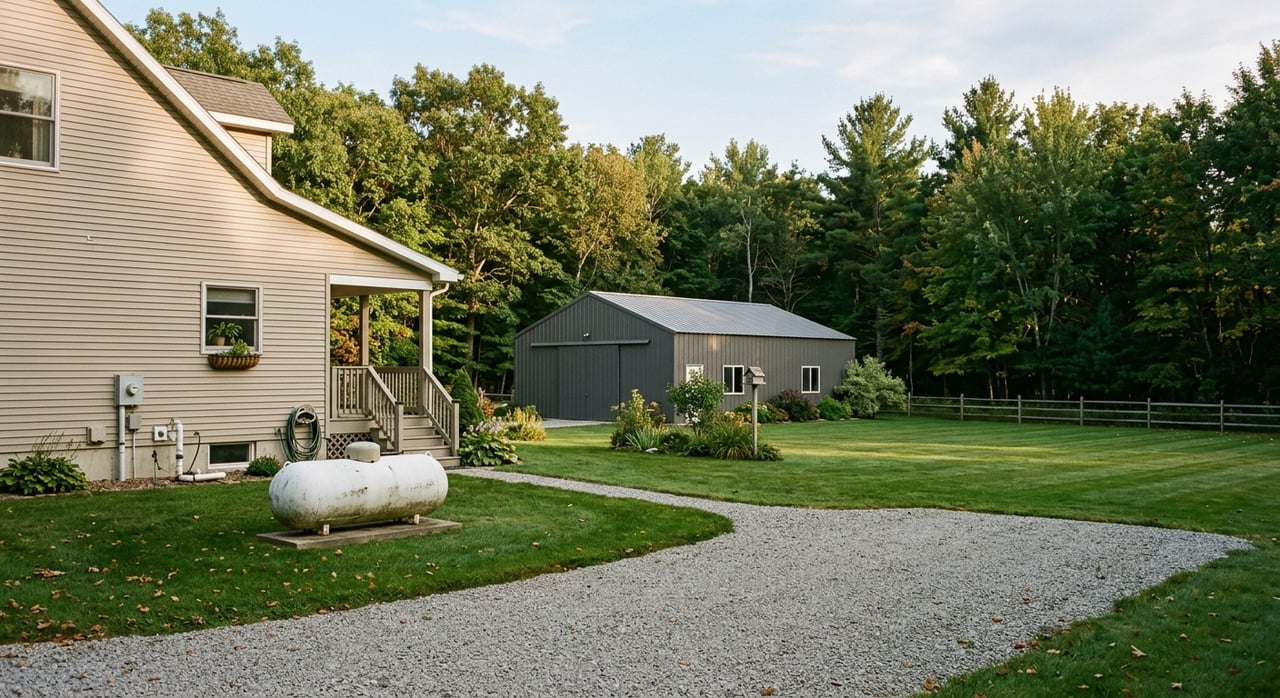
If you picture rural living as nothing but peace, privacy, and open skies, you are not wrong. But in Marshall County, country property also comes with real planning questions about zoning, utilities, maintenance, and daily logistics. If you are thinking about buying outside town, this guide will help you weigh the pros and tradeoffs so you can make a smart, confident move. Let’s dive in.
Why rural living appeals here
Marshall County gives you a very real version of country living. With an estimated 46,464 residents spread across 443.62 square miles of land, the county has plenty of room for open settings, larger parcels, and homes outside dense neighborhood patterns.
That matters if you want space that feels different from in-town living. Once you move beyond Plymouth or the smaller incorporated towns, the landscape shifts quickly, and that can mean more privacy, more room to spread out, and more flexibility in how you use a property.
The county’s planning approach supports that rural character. Its comprehensive plan makes room for rural housing patterns and prioritizes preserving farmland and natural amenities, which helps explain why many buyers look here for larger yards, outbuildings, gardens, equipment storage, or simply more distance from nearby homes.
Space and flexibility can be a real advantage
One of the biggest draws of rural property in Marshall County is that country living is not just one type of home. Some properties are true rural homes on land intended to stay largely rural, while others fall into agricultural-residential areas that may allow more flexible lot sizes and country-style uses.
That flexibility can matter a lot when you picture your day-to-day life. You may be looking for room for a workshop, a garden, a few animals, or extra storage for equipment and vehicles. In the right setting, those goals are part of the local land-use conversation, not an unusual exception.
The county’s A-3 Agricultural Residential district is a good example of that. It can include single-family homes, modular or manufactured homes, limited animal production, crop production, forestry and logging, home occupations, and accessory structures.
For many buyers, that is the zoning conversation behind the phrase hobby farm. It does not mean every rural parcel works the same way, but it does show why buyers who want more than a standard yard often start looking outside town.
Rural living can support mixed-use lifestyles
Another benefit is the potential for a property to fit more than one purpose. Marshall County’s plan notes that small-scale home-based businesses may be appropriate in agricultural areas if they have minimal impact on nearby residential uses.
That can be helpful if you work from home, want space for a side business, or need room for project-based hobbies. It also means rural living may offer a setup that feels more practical for your lifestyle than a typical in-town lot.
Still, flexibility is not automatic. Before you assume a parcel will fit your plans, it is important to confirm the exact zoning district and what the local rules allow.
The biggest tradeoff is utilities
If there is one issue that defines rural living in Marshall County, it is utilities. The county’s land-use plan says agricultural-residential and agricultural-conservation areas should generally rely on individual well and septic facilities rather than urban utilities and infrastructure.
That changes both your budget and your responsibilities. In town, public water and sewer may already be part of the setup. In a rural area, you may need to evaluate whether a well and septic system already exist, whether they are in working order, or whether a vacant parcel can support them at all.
This is where due diligence becomes much more site-specific. The Marshall County Health Department warns buyers of vacant ground to confirm that both a well and septic system can be installed and maintained on that property before buying, because every site is unique and neighboring parcels are not a reliable guide.
Well and septic planning is not optional
For a rural buyer, well and septic questions should come up early, not late. A property may look perfect from the road and still present problems below the surface if soils, drainage, or spacing requirements do not work.
The county health department requires permit steps for septic systems, including soil evaluation for new construction or system replacement. Depending on the situation, even a repair may need additional soil review.
Indiana guidance also says private wells should be installed with minimum separation distances from contamination sources, including 50 feet from septic tanks and absorption fields. The state also recommends annual testing of private wells.
Septic systems come with ongoing upkeep too. EPA guidance says septic tanks should generally be inspected every 1 to 3 years and pumped every 3 to 5 years. That is normal for rural ownership, but it is still a real maintenance item to budget for.
Access, drainage, and site work matter more than many buyers expect
A rural property is about more than the house itself. Access, driveway layout, drainage, and the physical shape of the lot can all affect how usable and affordable the property really is.
Marshall County’s building department says permit applications can require items such as a site plan, assigned address, driveway approval if applicable, septic permit if applicable, drainage approval if applicable, and other sign-offs before work can proceed. That means site feasibility is part of the buying conversation, especially for vacant land or properties you plan to improve.
This is one reason rural buying often takes a little more patience. A home outside town may offer more freedom, but it can also require more verification before you know exactly what is possible.
Town boundaries can change the rules quickly
One detail buyers sometimes miss is that local oversight can change fast depending on where the property sits. Marshall County planning and zoning rules apply to unincorporated areas, while towns such as Plymouth, Argos, Bourbon, Bremen, and Culver have separate plan commissions.
The building department also serves the unincorporated county plus several towns, while Plymouth has its own inspection department. In practical terms, a property just across a town boundary may involve different permit offices, different utility expectations, and a different approval path.
That is why rural living is not simply about finding a house with acreage. It is also about understanding which local authority has jurisdiction over the parcel and how that affects your plans.
Driving and internet should be part of your checklist
Rural buyers often focus first on land, views, and privacy. Those are important, but your daily routine matters too.
Marshall County is organized around Plymouth and several smaller towns rather than one continuous suburban layout. The countywide average commute is 22.3 minutes, and that helps show that driving is already a normal part of life here.
If you choose a more remote setting, errands, services, and appointments may take more planning. The farther you are from Plymouth, Argos, Bourbon, Bremen, Culver, or LaPaz, the more your day may depend on getting in the car.
Internet is another item worth checking by exact address. Countywide, 84.3% of households report a broadband subscription, which suggests service is common, but not something you should assume without verifying a specific property.
What to ask before buying a rural property
If you are seriously considering country property in Marshall County, a few questions can help you avoid expensive surprises.
- What zoning district is the parcel in?
- Does that zoning allow the home and uses you want?
- Is the property on public water and sewer, or will it need a private well and septic system?
- If it is vacant land, has the site been evaluated for well and septic feasibility?
- How far is the property from Plymouth or the town services you use most?
- What maintenance costs should you expect for septic, well testing, drainage, and driveway upkeep?
- Which permit office or planning authority oversees the parcel?
Those questions are not meant to scare you off. They are the practical side of buying well, and they are especially important when a property offers more land, more freedom, and more moving parts.
Is rural living in Marshall County right for you?
For the right buyer, rural living in Marshall County can be a great fit. You may get the extra space, privacy, and flexibility that are hard to find in town, along with a setting that supports gardens, outbuildings, equipment storage, or other country-style uses.
At the same time, those benefits come with tradeoffs. You may take on more responsibility for utilities, maintenance, and property feasibility, and your day-to-day routine may involve more driving and more planning.
The key is not deciding whether rural living is good or bad. It is deciding whether the property’s setup matches the way you want to live, what you want to do with the land, and how much hands-on ownership you are comfortable taking on.
If you are comparing in-town homes, acreage, or vacant land in Marshall County, working with a local brokerage that understands the differences can save you time and help you ask the right questions early. To talk through your options with a steady, local guide, schedule a free consultation with Jim Masterson.
FAQs
What makes rural living in Marshall County different from living in town?
- Rural properties in Marshall County often rely on private well and septic systems, involve more site-specific zoning and permit questions, and usually require more driving for errands and services.
What should you check before buying vacant land in Marshall County?
- You should confirm the zoning district, ask whether the site can support a well and septic system, and verify access, drainage, and permit requirements before you buy.
What is A-3 Agricultural Residential zoning in Marshall County?
- The county’s A-3 Agricultural Residential district can include single-family homes, modular or manufactured homes, limited animal production, crop production, forestry and logging, home occupations, and accessory structures.
Do rural homes in Marshall County usually have public utilities?
- Not always. In many rural areas, agricultural-residential and agricultural-conservation land is expected to rely on individual well and septic facilities rather than urban utilities.
How often should a septic system or private well be maintained?
- Private wells are recommended for annual testing, and septic tanks should generally be inspected every 1 to 3 years and pumped every 3 to 5 years.
Why do town boundaries matter when buying property in Marshall County?
- A parcel’s location can affect which planning, zoning, and inspection offices oversee the property, and that can change permit steps, utility expectations, and approval processes.
