Drive down Michigan Street on a Saturday morning in September and you will pass the Marshall County Museum, the REES Theatre, a gift shop that doubles as a ticket counter, and, a few blocks north, a 160-year-old house that just spent an afternoon with its doors open to strangers. None of this is new construction. All of it is old buildings doing new things, and if you have lived in Plymouth for a while, you have probably noticed the street feels different than it did three or four years ago without quite being able to say why.
Here is why: the same short run of Michigan Street is now carrying almost the entire fall calendar for downtown Plymouth, and that concentration is recent. The REES Theatre only reopened in October 2022. The historical society's home tours are a newer tradition than most people assume. Put those two things next to each other and you get a street that used to be somewhere you drove through on the way to the courthouse and is now somewhere you might actually plan an evening around.
A House That Sold Candy and a Senate Seat
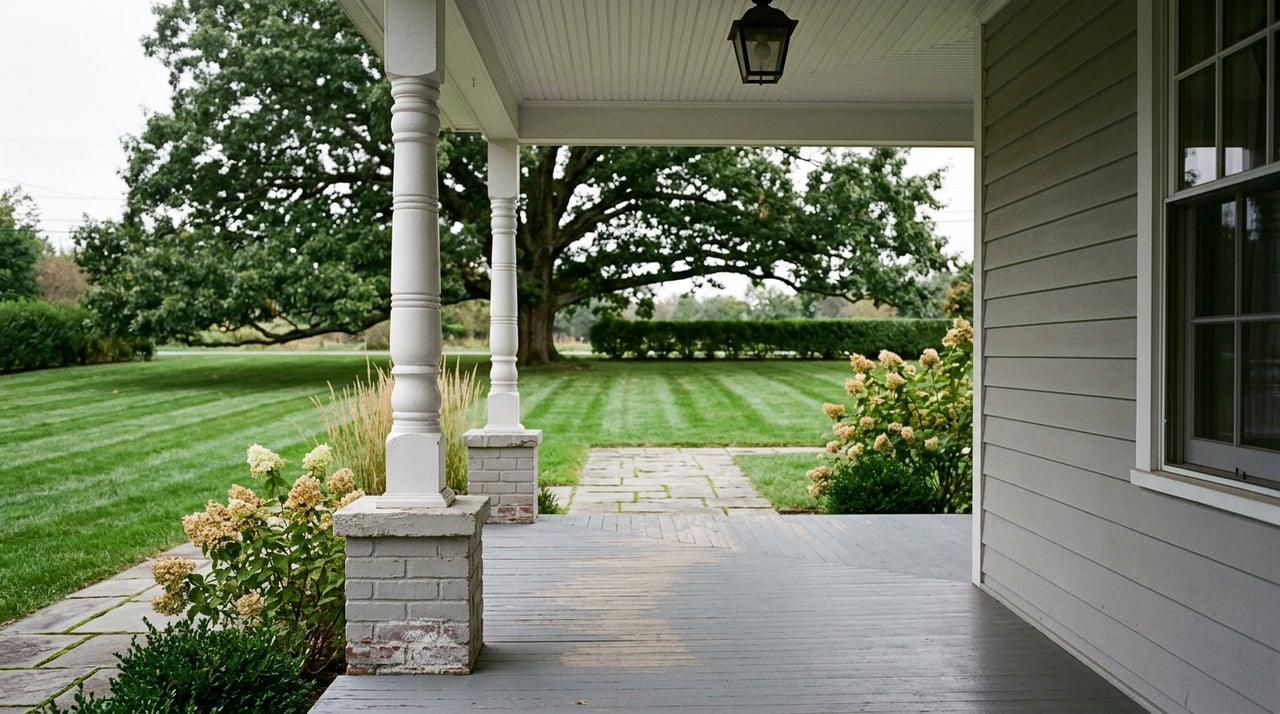
On September 13, the Marshall County Historical Society opened the Corbin-Bechaka House at 913 N. Michigan Street for its annual home tour. The house was built around 1865 by Horace Corbin, who was Plymouth's first mayor and later served in the Indiana State Senate. Corbin's original floor plan did not last long. He hired architect William S. Matthews to gut and rework the interior in 1880, and the next owners, the Hess family, brought in a locally known stonemason named William Foker around 1915 to add new porches on the front and south side.
The house eventually passed to Harry and Dimitria Bechaka, immigrants from Greece who ran the Candy Kitchen restaurant in Plymouth. They nominated the home for a Marshall County Landmark award in 1995 and received it. The most recent owners, Robert Mott and Dennis Baker, completed a full restoration before this year's tour, which ran from 1 to 5 p.m. with tickets capped at $20 and sold through the Marshall County Historical Society and Museum at 123 N. Michigan Street.
That address is worth sitting with. The museum that sells the tickets and the house the tickets get you into are both on Michigan Street. So is the theater. This is not a coincidence of geography so much as a pattern in how Plymouth spends its preservation energy: on one street, repeatedly, rather than scattered across the county.
The Same Society, a Second House, a Different Town
The Corbin-Bechaka tour was not a standalone event. It was the second of two home tours the historical society ran this year, and the first one points at a name many Marshall County residents already recognize. On August 16, the society opened the Dietrich-Bowen House in Bremen, a Queen Anne Victorian built in 1901 by early Bremen businessman John Dietrich. The house changed hands in 1922 and again in 1953, when it was purchased by Dr. Otis R. Bowen, who used it as both a home and a medical office before he was elected Governor of Indiana and later served as Secretary of Health and Human Services under President Reagan. Current owners Michael and Andreea Cope finished restoring the home ahead of this year's tour, also ticketed at $20 through the same historical society.
Two houses, two towns, one organization running both tours within four weeks of each other. If you live in Plymouth and only track what happens on your own street, you would miss that the same preservation effort touching Michigan Street also reaches into Bremen's housing stock. It is a small detail, but it says something about how Marshall County's older homes get cared for: not house by house, but through an organization that treats the whole county's architectural history as one project.
What Changed at 100 North Michigan
The REES Theatre sits at 100 N. Michigan Street in a building that has been a furniture store, a funeral parlor, and, starting in 1940, a 600-seat single-screen movie house. It closed in December 2009 after a final showing of "Old Dogs." For over a decade the marquee sat dark. A nonprofit took ownership in 2017, ran a multiyear capital campaign that raised more than four million dollars, and reopened the building on October 1, 2022, with flexible seating for 225 patrons, a new performance stage, and an LED video wall.
The REES marked its second anniversary in 2024 with a Celebration of the Arts Week, and by that point the theater had hosted more than 300 events since reopening. That works out to nearly three events a week, every week, for two straight years, in a building that had been sitting empty for thirteen years before that. City officials have tied the REES to a broader downtown redevelopment push, describing it as one of eleven downtown Plymouth projects backed by roughly $21 million in community investment.
If you want to buy a ticket in person rather than online, you do not go to the theater's box office. You walk one door north to Na Rie Simple Treasures at 104 N. Michigan Street, a gift shop that sells REES tickets alongside its own merchandise. It is a small arrangement, but it is the kind of thing that only happens on a street where the businesses are close enough, and friendly enough, to share a counter.
The Rest of the Fall Calendar
Michigan Street is not the only place with something on the calendar. A few blocks away, River Park Square and Centennial Park carry their own share of the season.
| Date | Event | Location |
|---|---|---|
| Saturdays through October | Farmers Market | River Park Square |
| Sun., Oct. 4 | Down Syndrome Awareness Walk/Run | Centennial Park |
| Sat., Oct. 24 | Trunk-or-Treat | River Park Square |
The Farmers Market runs out of a semi-circular building at River Park Square from May through October, with the park's splash pad and band-shell drawing families well past market hours on a warm Saturday. The City of Plymouth Parks and Recreation Department has also finished its Greenway Trail Extension project at River Park Square, with plantings along the new stretch still going in, and a matching trail extension at Price's Pond that is complete except for finishing touches planned for spring.
None of this competes with Michigan Street. It complements it. A Saturday morning at the farmers market and a Saturday evening at the REES are two different corners of the same town, close enough that most residents can do both without moving the car.
What the Concentration Actually Means
Put it together and the picture is not "Plymouth has a full fall calendar," which is true of a lot of small towns and tells you nothing you did not already suspect. It is that a specific half-dozen blocks of Michigan Street now hold the county museum, a restored 1940s theater running two events a week, and a home-tour tradition that opens up private houses most residents would otherwise only see from the sidewalk. Before October 2022, only the museum was reliably open to the public on that stretch. The theater sat dark for thirteen years, and the home-tour program had not yet grown into the two-town, two-Saturday tradition it is today.
That is the shift worth noticing if you live here: downtown Plymouth's history stopped being something you drove past and started being something you can walk into. The REES gave the street a reason to be busy on a Friday night. The historical society gave it a reason to be busy on a Saturday afternoon in August and again in September. Neither of those things existed in their current form a few years ago, and both of them now anchor to the same street.
If you are curious about what that kind of downtown momentum tends to mean for the neighborhoods around it, our guide to living near downtown Plymouth looks at how proximity to Michigan Street shapes daily routines for the people who live closest to it. For a broader view of the towns and communities that make up Marshall County, our Marshall County Properties page is a good starting point, and if the Dietrich-Bowen House has you curious about Bremen specifically, our Bremen Properties page covers that town in more depth.
Whether you are watching downtown Plymouth for the first time or the fiftieth, Jim Masterson and the team at Masterson & Associates keep an eye on what is actually changing in Plymouth and the towns around it. If you ever want to talk through what any of it means for your own street, schedule a free consultation and we will walk through it with you.
